

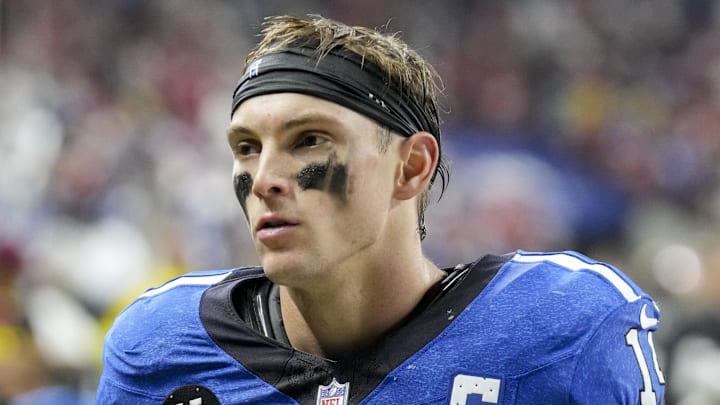
The Indianapolis Colts have an interesting offseason coming up. After starting 8-2 and trending toward making the playoffs, Indy had a late-season injury bug collapse and missed the postseason.
The team has major financial decisions to make now, including a $29 million cap hit for Michael Pittman, re-signing an in-demand deep threat in Alec Pierce, and bringing back quarterback Daniel Jones. While it would be difficult to keep everyone who helped the team get to that 8-2 start, it's not possible.
The feeling among many fans is that this is the last chance for general manager Chris Ballard and head coach Shane Steichen to make a playoff run. Fans of the team have rightfully called for an immediate turnaround. Anything else would be unacceptable.
Should the Indianapolis Colts use the franchise tag?
The franchise tag is a tool used by many teams to keep players on their team while negotiating a long-term deal. The tag, though, also comes at a price.
The team placing the tag must pay that player an average of the top five contracts at their position. For example, if the top five positions at that position are making $100 million over the life of their contracts, then that player gets $20 million under that designation, or they get 120% of their previous salary, whichever is higher. Both sides win: the team retains the player, and the player usually gets a hefty payday.
Considering each team gets one franchise tag every year and the cost of it, it's important who the Colts might choose to place it on.
Daniel Jones
When Jones was signed, the entire fanbase let out a collective sigh. He was a former New York Giants player who was unceremoniously cut after signing a massive deal. Although the fans eventually welcomed Jones into Indianapolis, it took some convincing. Now, the Colts' success is tied to Jones.
Signing a one-year prove-it deal worth $14 million, Ballard and the front office implied Jones should go out and prove he deserves a long-term deal, and he did. Leading one of the most efficient and effective offenses in recent history through the first half of the 2025 season, Jones has proven he can be successful on this team. Unfortunately, this cost would be nearly $50 million.
Despite the cost, the team must stop the quarterback carousel.
Alec Pierce
Indy has two players in the top-10 free agents this year: Daniel Jones and Alec Pierce. The 25-year old is entering his fifth season and is in his prime. Pierce has a unique ability to be a big body receiver who can also speed past the secondary. Leading the league in yards per catch for the second-straight year, Pierce is set to have a major payday.
According to Spotrac, the market value for Pierce is just around $20 million a year, about 30% less than Pittman's current cap hit for 2026. While signing Pierce to a long-term deal makes more sense for the future of the team, Indianapolis could leverage a $28 million franchise tag to keep him in the white and blue until a long-term deal is made.
However, the major downside to this option is that it does tie up nearly $50 million in just two receivers. And with other players on the defense, Kwitty Paye and Nick Cross notably, the decision-makers must take this cost into account.
Braden Smith
Since Anthony Castanzo retired, the anchor on the end has been Braden Smith. Dealing with injuries last season, Smith still played above average for his position. Smith is entering his ninth year and is set to turn 30 in March. A 30-year old tackle can still be effective - see Trent Williams and Andrew Wentworth - but the cost will be huge.
The franchise tag cost for the right-tackle position in 2026 is just over $27 million, a far cry from his 2025 salary of $10 million. His market value as it stands is roughly $13 million per year - the team would have to pay double his market value for one-year to retain him if the franchise tag is used.
There's no good option to keep these players around. Indianapolis can either sign them to long-term deals and kick the can down the road as they did with Pittman's contract, or they let some centerpieces of their offensive success walk in free agency.
 Add us as a preferred source on Google