

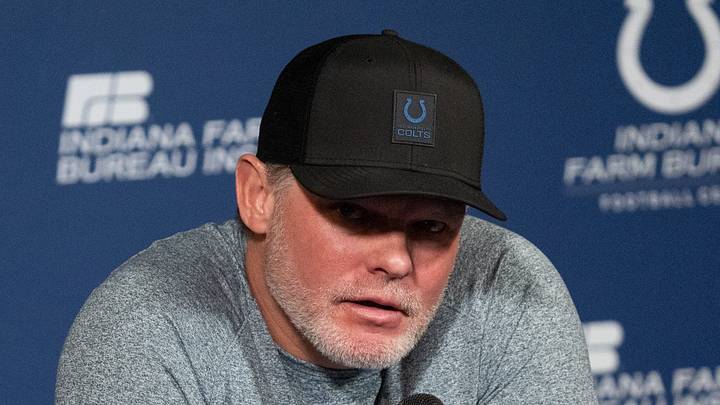
History says there’s still a chance for Indianapolis Colts general manager Chris Ballard to build a Super Bowl-winning roster.
More than a few Indianapolis Colts fans have gotten impatient with the franchise’s middling results in Ballard’s nine seasons as the team’s primary football decision-maker. The Colts are 70-78-1 with two playoff appearances, just one postseason victory, and zero division titles under Ballard’s direction.
However, the list of Super Bowl winners offers multiple examples of championship general managers who had similar results after a similar amount of time before breaking through. Meet five general managers who built Super Bowl teams after some rough early years, and the lessons the Colts might copy.
Indianapolis Colts' Chris Ballard can learn a thing or two from these champion general managers
Ozzie Newsome, Baltimore Ravens
- Record entering first Super Bowl season: 29-50-1
- The lesson: Build on a stellar draft class
Newsome can be forgiven for his team’s subpar record through his five years as the Browns-turned-Ravens general manager. He inherited a perennial loser and also had to navigate the franchise’s move to Baltimore.
He also can be forgiven because during those five years, he set the foundation for the Ravens’ 2000 championship team. His first two draft picks – offensive lineman Jonathan Ogden and linebacker Ray Lewis in 1996 – both went on to Hall of Fame careers. Baltimore won it all behind one of the best defenses in NFL history in 2000 and has been a perennial winner ever since.
Can the same formula work for the Colts? The moment has probably passed. Like Newsome, Ballard connected for two home runs in one of his early drafts (guard Quenton Nelson and linebacker Shaquille Leonard in 2018). Unlike Newsome, Ballard didn’t build on that early draft success.
George Young, New York Giants
- Record entering first Super Bowl season: 45-59-1
- The lesson: Draft the greatest linebacker of all time and hire defensive masterminds as coaches
The Giants were under .500 in four of Young’s first five seasons, but the pieces were in place for a championship run. Young drafted Hall of Fame linebacker Lawrence Taylor in 1981. He hired Bill Parcells as head coach in 1983. Bill Belichick, who had joined the organization in 1979, was promoted to defensive coordinator in 1985.
It all came together in 1986, when the Giants went 14-2 and won the franchise’s first Super Bowl. The same core claimed another championship after the 1990 season.
The same formula is unlikely to work for Indy. Do you see the next left tackle on the current Indianapolis roster?
Jason Licht, Tampa Bay Buccaneers
- Record entering first Super Bowl season: 34-62
- The lesson: Sign the greatest quarterback of all time in free agency
The Buccaneers were frustrating underachievers in the late 2010s. Then Tom Brady became a free agent in the spring of 2020. Licht enticed Brady to take his talents to Tampa Bay. A few months later, Brady and the Bucs were Super Bowl champions.
Indianapolis following the same path is highly unlikely. What are the odds of a Brady-level quarterback ever hitting the open market again?
Mickey Loomis, New Orleans Saints
- Record entering first Super Bowl season: 53-59
- The lesson: Identify your coach and franchise quarterback, and get out of the way
Loomis made two franchise-defining moves after the Saints went 3-13 in 2005, when the team was forced to play most of its season in San Antonio due to the damage Hurricane Katrina wreaked in New Orleans. He hired Sean Payton as coach. And he acquired Drew Brees to play quarterback.
The pairing led the Saints to the NFC Championship Game in their first year together in 2006. They won it all – at the Colts’ expense – three years later.
The same formula worked for the Colts for 10 games last season. The question now: Can coach Shane Steichen and quarterback Daniel Jones recapture the magic of last season’s 8-2 start and maintain it over the long term?
Howie Roseman, Philadelphia Eagles
- Record entering first Super Bowl season: 56-56
- The lesson: Keep your options open
Roseman built championship rosters seven years apart in Philadelphia. Roseman has his share of hits and misses, but his rosters generally have more talent than the competition because he gives himself more chances than the competition.
Philadelphia has been known for stockpiling draft picks and forward-thinking salary cap management during Roseman’s tenure. That flexibility allows the Eagles to go all-in when the moment is right.
Roseman needed seven years of .500 ball and had to survive some organizational power struggles before he built his first Super Bowl champion. Philadelphia has been a consistent winner ever since.
This is the path Ballard has the best chance to replicate. He has demonstrated some ability to maximize assets - his record on late-round draft picks is actually quite impressive. If he can display the same success in other aspects of roster building, the Colts could climb into regular contention.
 Add us as a preferred source on Google